.svg)

Most parents assume orthodontics is a teenage milestone, something that happens once all the baby teeth are gone. It often is. But the American Association of Orthodontists recommends a first orthodontic check-up by age 7, and there is good reason for that number. Seeing a child early does not mean braces are coming right away. It means we can catch small issues before they turn into bigger ones.
Why age 7
By around seven, a child has a mix of baby and permanent teeth, and the jaw is still growing. That combination gives us our clearest early window. We can see how the adult teeth are coming in, how the bite is developing, and whether the jaw has enough room for everything that is on the way. Spotting a crossbite, severe crowding, or a growth pattern at this stage lets us plan around it while a child’s growth is still on our side.
What we actually look for
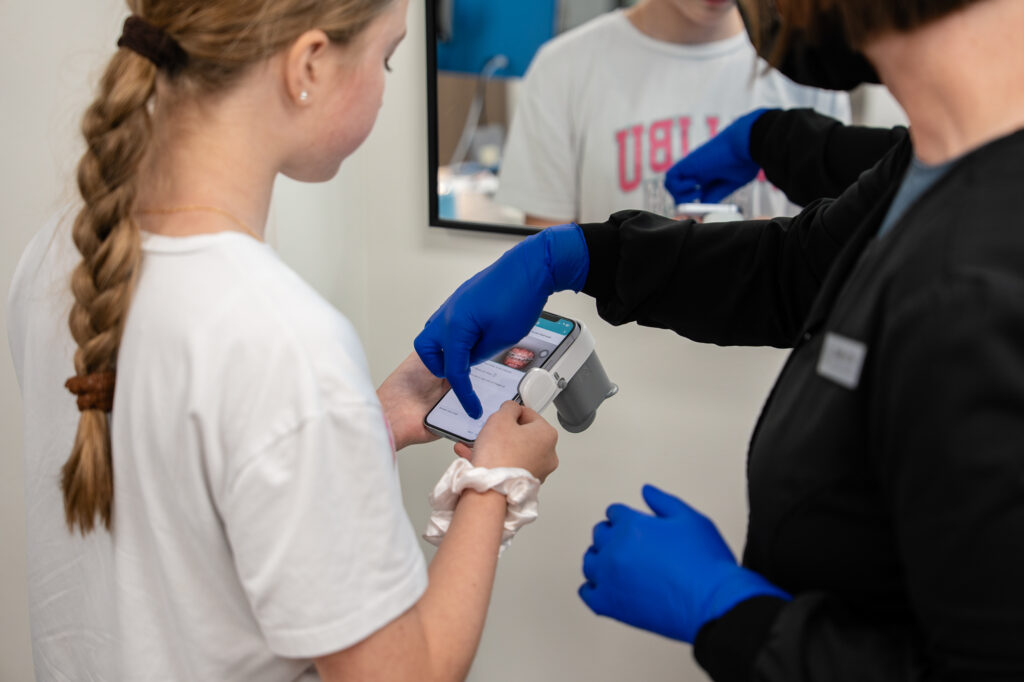
A first visit is short, friendly, and pressure-free. During an evaluation at our all-ages orthodontic care visits, we check for a handful of things:
- Crowding or spacing that signals the jaw may run short on room.
- Crossbites, where upper and lower teeth do not meet correctly.
- Protruding front teeth that are more prone to injury.
- Early or late loss of baby teeth, which can throw off the eruption of adult teeth.
- Habits like thumb sucking that can shape the growing bite.
For most children, the answer that day is simply to keep an eye on things. We place them in a monitoring rhythm and simply watch growth over time, with no rush and no pressure.
What two-phase treatment can prevent
When a child does need early help, we sometimes recommend two-phase treatment. The first phase, done while a child is still growing, guides jaw development and creates room for incoming teeth. A later second phase, usually in the early teen years, fine-tunes the bite and alignment. Treating in two stages can reduce the need for extractions later, lower the risk of impacted teeth, and make the teenage phase shorter and simpler. Not every child needs it, and we will only recommend it when it genuinely changes the outcome.
Dr. Robert Aszkler and Dr. Stephen Aszkler have guided families across Hamburg and Orchard Park through exactly these decisions, and you can learn more about Dr. Rob Aszkler’s philosophy on early care. When braces or aligners do eventually enter the picture, our guide comparing Invisalign and braces is a helpful next read.
If your child is older than 7
Do not worry if you missed the age-7 window. It is a guideline, not a deadline. An evaluation is valuable at any age, and plenty of great outcomes start in the teen years or adulthood. The point is simply not to wait on a concern you have already noticed.
If you have been wondering about your child’s bite or the way their teeth are coming in, the easiest next step is a look from us. Schedule a free consultation at our Hamburg or Orchard Park office.
Frequently Asked Questions
At what age should my child first see an orthodontist?
The American Association of Orthodontists recommends a first check-up by age 7, when a child has a mix of baby and permanent teeth and the jaw is still growing.
Will my child get braces at the first visit?
Usually not. For most children the first visit is an evaluation, and we simply monitor growth over time. We only begin treatment when there is a clear reason to.
What is two-phase treatment?
It is orthodontic care done in two stages. An early first phase guides jaw growth and makes room for incoming teeth, and a later phase fine-tunes the bite. It can reduce the need for extractions and shorten later treatment.
Is it too late if my child is already 10 or older?
Not at all. Age 7 is a guideline for the first check, not a deadline for treatment. An evaluation is worthwhile at any age, and excellent results start in the teen years and adulthood every day.